
East Chicago Address History Sources
No single index identifies every person tied to one parcel. The current assessor record supplies a stable parcel number, situs address, legal description, owner, mailing address, and transfer clues. A deed proves a transfer of title, not residence. Printed directories and census schedules add the household layer, while maps, permits, newspapers, obituaries, and probate records explain changes between those dated snapshots.
| Source | Years It Covers | Where Held | What It Shows |
|---|---|---|---|
| Recorder deeds | More than 200 years preserved; web cutoff not published | Lake County Recorder | Grantors, grantees, instruments, and legal land descriptions |
| City directories | 1908-1958 local run | ECPL East Chicago Room | Names and dated street-address leads |
| Telephone books | Back to 1888 | ECPL East Chicago Room | Subscribers, addresses, and old exchange labels |
| Federal census | Public schedules through 1950 | Archives and library databases | Household members at a point in time |
| Sanborn maps | 1930; later runs through 1948 | Library of Congress and State Library | Building footprints, use, and street context |
For a recent transfer, start with the free Lake County Assessor Engage search. For an older household, select the source closest to the target date. The East Chicago Room is temporarily closed for renovation, so call before planning a visit and use digital or regional archives meanwhile.
Anchor East Chicago Previous Residents
Save the current parcel identifier before following names. Engage accepts an owner name, street address, or parcel number and exposes a property record card, transfer history, sales details, and map tools. The county tax search adds real-property number, owner or business, last name, mailing address, and location modes. A mailing address may point outside East Chicago even when the physical situs remains in the city.
The parcel number and legal description usually outlast a street-label change. Compare both against every deed. Also record the spelling, directional prefix, unit, and neighborhood label exactly as each old source prints them. Those details prevent one building from being confused with another.
Note: An assessor owner is not proof that the owner occupied the East Chicago property or that no other household members lived there.
Lake County's Deep Deed Archive
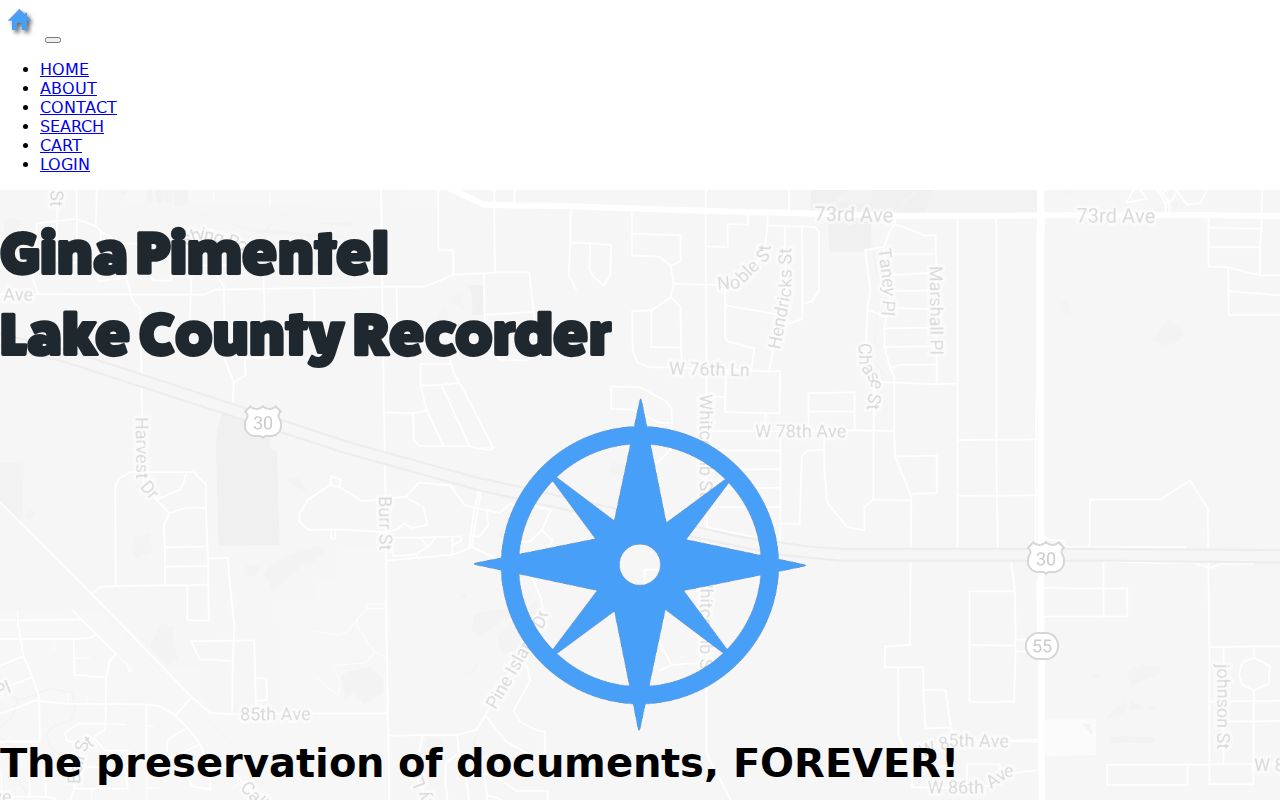
The Lake County Recorder portal advertises more than three million documents and recordings more than two centuries old. That scale makes the collection vital for previous residents research. It does not mean all of those records can be searched openly on the web. The public search route leads to an account login, and the office does not publish an exact online cutoff.
Use the portal when access is available, but treat the recorder counter and older books or microfilm as part of the normal chain. The office can also supply document images for a charge. Never invent a start date for the online index. Ask staff which index covers the target year and whether a name, book and page, or instrument number is needed.
The screenshot below comes from the Recorder coverage and account page.
Trace East Chicago Owners Backward
A chain of title is the linked series of transfers for the same land. Start with today's owner and work back one recorded transfer at a time. Names alone are not enough. Match the legal description, parcel clues, execution or recording date, and instrument type before accepting the next link.
- Find the current parcel in Engage. Save the owner, parcel ID, situs, legal description, and transfer details.
- Locate that owner's purchase deed. Confirm that it describes the same land.
- Take the seller, or grantor, and search that person as an earlier grantee.
- Repeat the handoff. Keep citations for instrument numbers, dates, and book and page references.
- When the web index stops, contact the Recorder for the correct counter, book, or microfilm index.
- Grantor and grantee
- The grantor gives an interest in land; the grantee receives it.
- Chain of title
- The sequence of recorded transfers connecting the present owner to earlier owners.
- Legal description
- The formal land description in a deed. It is more durable than a postal address.
East Chicago's 1933 Name Bridge
Forsyth Avenue became Indianapolis Boulevard in 1933. A search using only the modern name can therefore miss earlier occupants, maps, news items, and deeds. Run both names and compare intersecting streets, legal descriptions, and map position before joining results.
This is more than a spelling tip. East Chicago and Indiana Harbor also appear under compact locality forms such as “E Chgo” and “Ind Hbr” in older telephone material. Preserve the source's form in notes, then add the modern equivalent in a separate field.
Local history tip. Search Indianapolis Boulevard and Forsyth Avenue as separate terms, then bridge them with parcel and cross-street evidence.
Date East Chicago Structures
Sanborn fire-insurance maps help establish what stood on a lot, how a building was shaped, and how the block was arranged. The Library of Congress catalog identifies a 1930 East Chicago set with 103 sheets. The Indiana State Library guide lists East Chicago runs spanning 1930, 1931-1943, and 1930-1948.
Maps do not name every occupant. They do show whether a structure appears, disappears, expands, or changes use. For later alterations, request city permit or inspection files by exact address. East Chicago's public permit page is under construction and no address-keyed code-case search was found, so a particularized request under APRA is the practical fallback.
East Chicago Archive Fallbacks
The East Chicago Room lists city directories, telephone books, newspapers, yearbooks, cemetery sources, and Sanborn maps. Those pieces make it a house-history workbench even though the library does not advertise a formal house-history service. Indiana Memory and the IU Calumet Regional Archives can fill gaps while the room is closed for renovation.
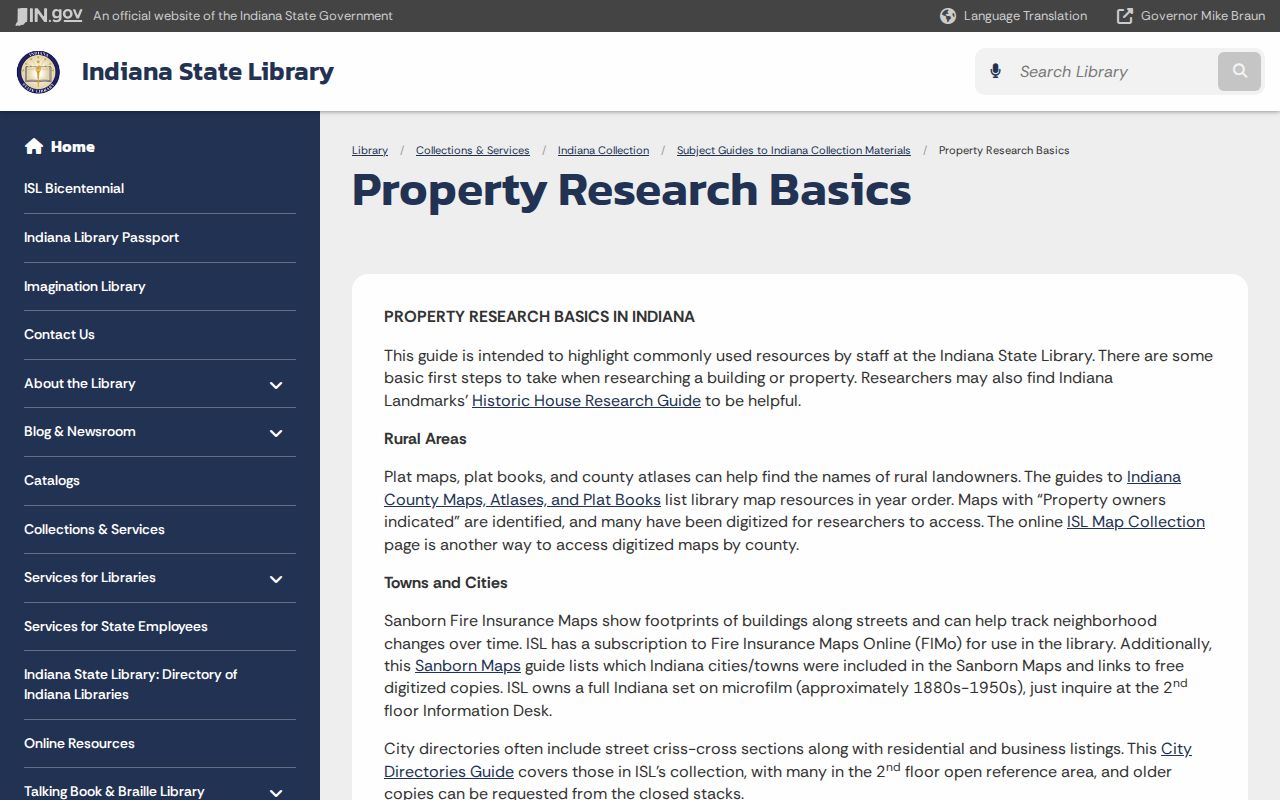
The Indiana State Library property research guide explains how deeds, directories, maps, newspapers, and tax sources support one another. Its captured page appears below.
Search Indiana's Permanent Records
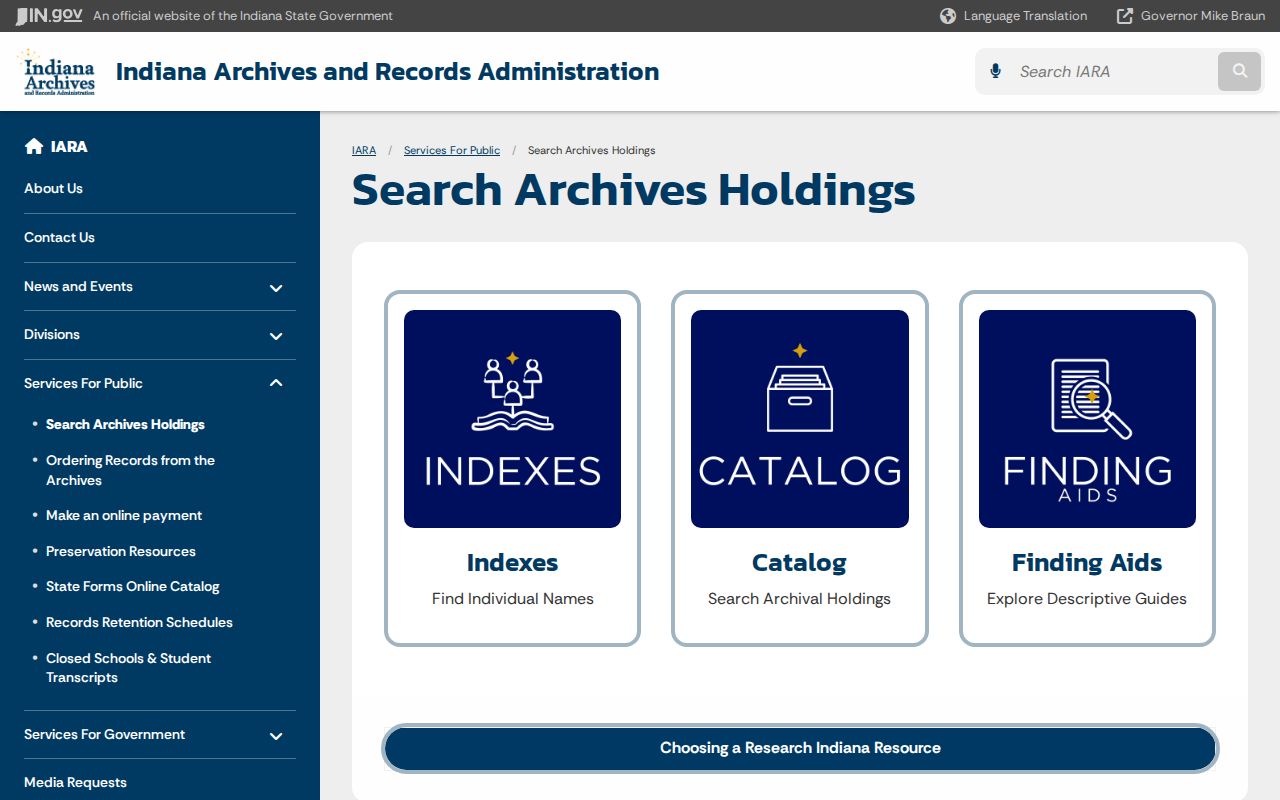
The Indiana Archives and Records Administration holdings search routes researchers among catalogs, indexes, and finding aids. It is useful when an East Chicago trail reaches a state agency record or a permanent collection not held locally. Search first, then contact the reading room with the collection title, box, volume, and date range.
The holdings-search page shown here emphasizes that catalog descriptions are finding tools. A catalog match is not the record image itself.
Confirm East Chicago Past Households
Ownership is only half the question. City and telephone directories can place a named subscriber or householder at an address between census years. Public federal schedules through 1950 may identify other household members, relationships, ages, and occupations. The collection history belongs on the East Chicago city directory page; here, each dated entry serves as one link in the address trail.
- Choose the directory volume closest to the target year and copy the entry exactly.
- Check the next available volume to see whether the name or address changed.
- Match a public census year to the household, using enumeration geography and adjacent names when street numbering is unclear.
- Use newspapers, cemetery sources, and the Lake County Public Library obituary index to explain a disappearance.
- Search MyCase or ask the Lake County Clerk about probate filings when an estate may have transferred the property.
An obituary is a lead, not proof of residence at the exact time of death. Probate dockets may name heirs or property, but sealed material stays unavailable. Keep every conclusion tied to its date and source.
Lawful use. Research previous residents for house history, genealogy, estates, or personal curiosity. Never use an address trail to track, intimidate, or harm a living person.